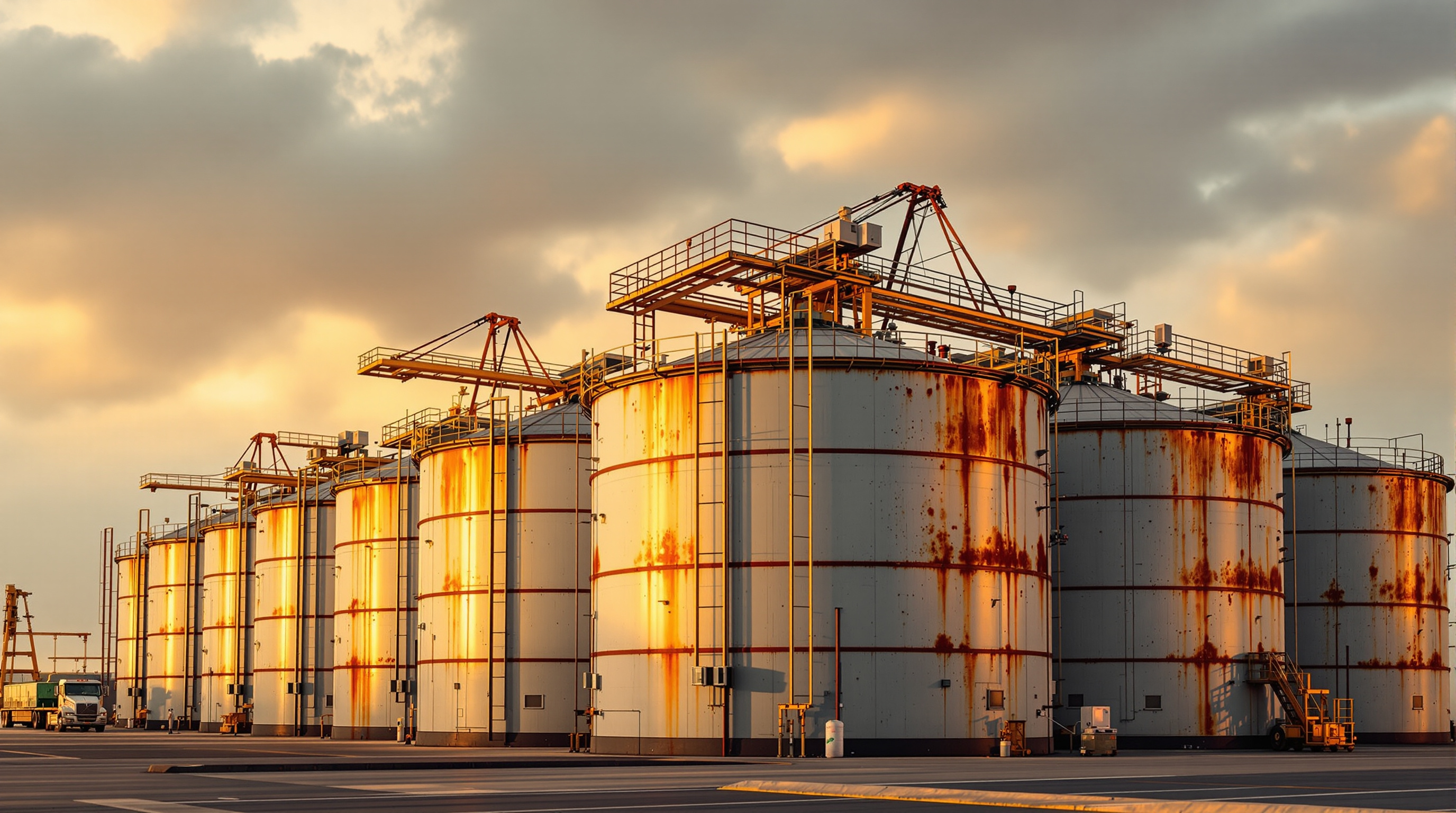
Chemical tankers carry an extraordinarily diverse range of liquid bulk commodities. This diversity — spanning edible commodities, industrial feedstocks, and specialty chemicals — is what distinguishes parcel chemical tankers from simpler tanker categories and demands the specialized vessel design features that characterize the sector.
Vegetable Oils and Animal Fats
Edible vegetable oils and animal fats represent a major segment of the chemical tanker cargo book. These include:
- Palm oil — The world's most widely traded vegetable oil, produced primarily in Malaysia and Indonesia. Palm oil trade routes include major flows from Southeast Asia to India, China, Europe, and North America.
- Palm kernel oil — A byproduct of palm oil production, used in food manufacturing and cosmetics.
- Coconut oil — Produced in the Philippines and other Pacific island nations, traded across the Pacific and into European markets.
- Soybean oil — A major commodity particularly from South America and the United States.
- Animal fats — Including tallow and fish oils, used in food manufacturing, animal feed, and industrial processes.
The Food and Agriculture Organization of the United Nations (FAO) tracks global vegetable oil trade, which represents billions of tonnes of annual maritime transport demand.
Liquid Industrial Chemicals
Industrial liquid chemicals constitute the other major cargo category for chemical tankers. These span a vast range of products:
- Methanol — A primary industrial chemical used as a fuel, solvent, and feedstock for plastics and resins. Major methanol trade flows originate from the Middle East and Trinidad.
- Caustic soda (sodium hydroxide) — Essential to paper, textile, and chemical manufacturing industries.
- Styrene — A precursor to polystyrene and other plastics.
- Benzene — A fundamental petrochemical used in plastics, resins, synthetic fibers, and rubber.
- Xylene and Toluene — Petrochemical solvents and chemical feedstocks.
- Ethylene dichloride (EDC) — A major precursor to PVC plastic production.
Biofuel and Renewable Feedstocks
The renewable fuel supply chain has become a substantial source of parcel tanker demand. Fuel ethanol moves in large volumes from Brazilian and United States export terminals, while biodiesel and the feedstocks behind it — used cooking oil, category 3 tallow, palm fatty acid distillate and rapeseed oil — are drawn towards refineries in northwest Europe, Singapore and the United States Gulf. These cargoes carry sustainability certification, so charterers commonly demand documented prior-cargo histories and independently inspected tanks before loading.
Inorganic Acids and Specialty Chemicals
Some of the most technically demanding cargoes in the chemical tanker sector are inorganic acids, which require specialized stainless steel or acid-resistant tank materials:
- Phosphoric acid — Used in fertilizer production, food processing, and industrial applications.
- Sulfuric acid — The world's most widely produced industrial chemical, used across virtually every manufacturing sector.
- Hydrochloric acid — Used in steel processing, chemical manufacturing, and water treatment.
Cargo Segregation Requirements
One of the most complex aspects of parcel chemical tanker operations is managing the compatibility requirements between different cargoes. Many liquid chemicals cannot be stored in tanks adjacent to each other, or share pump lines, without risking contamination or dangerous chemical reactions. Chemical tanker operators maintain sophisticated cargo compatibility matrices to ensure safe loading planning.
Modern parcel tankers may carry up to 31 segregated parcels simultaneously, each isolated in its own dedicated tanks with separate loading and discharge lines, avoiding any cross-contamination between incompatible chemicals.