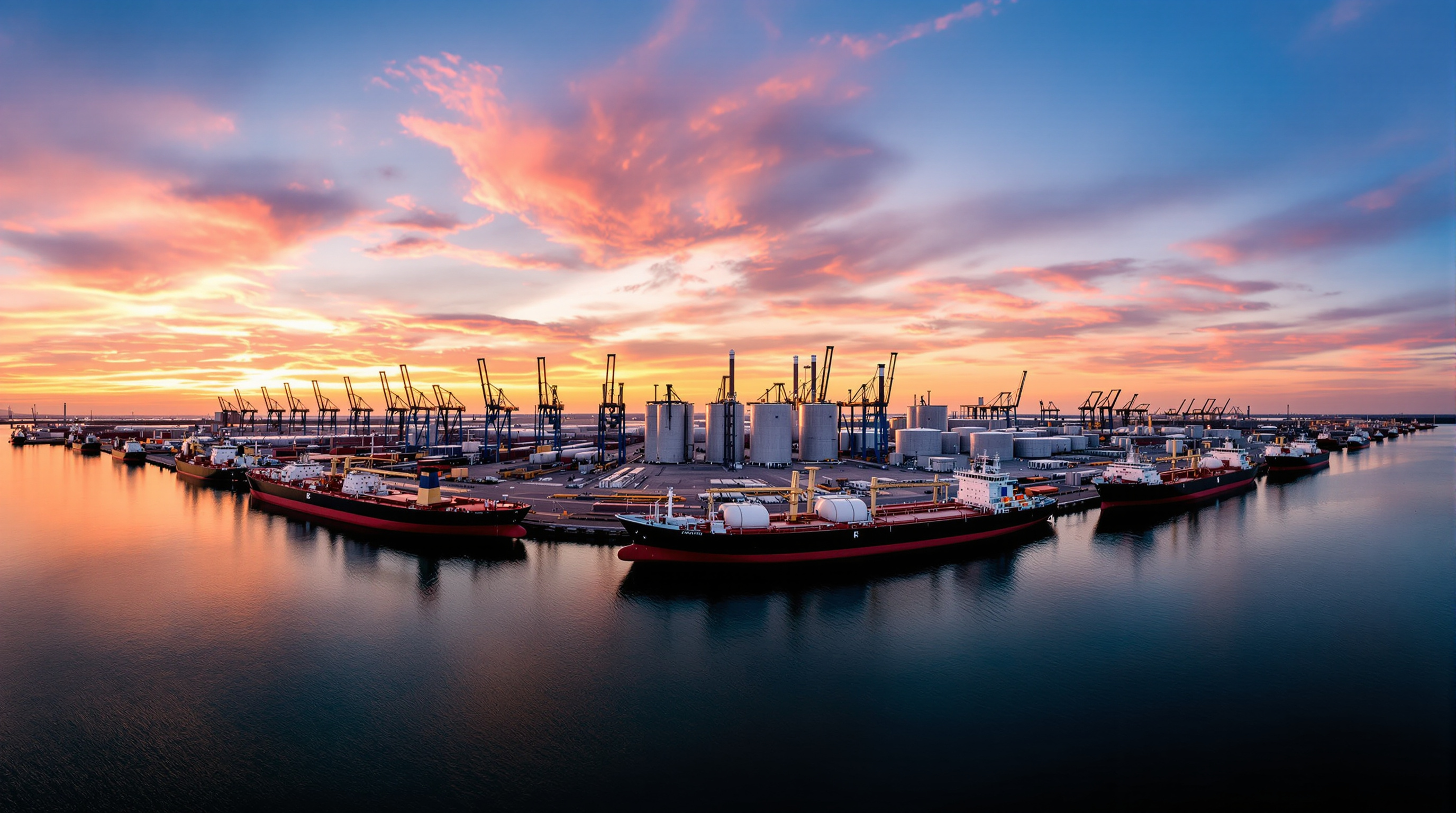
The geography of chemical tanker shipping mirrors the geography of global commodity production and industrial manufacturing. Understanding where liquid bulk cargoes come from and where they go helps explain why certain trade lanes are among the most heavily serviced in the world's merchant fleet.
Southeast Asian Vegetable Oils: The World's Edible Oil Highway
Malaysia and Indonesia together account for the vast majority of the world's palm oil production, making Southeast Asia the hub of the global edible oil shipping market. Palm oil produced in Sabah, Sarawak, and Kalimantan flows outward across every major ocean:
- To India — The world's largest palm oil importer, receiving millions of tonnes per year for food manufacturing and cooking use
- To China — A major consumer for both food and industrial applications
- To Europe — For food manufacturing, biodiesel production, and industrial use
- To Pakistan and Bangladesh — For cooking oil and food manufacturing
The Philippines produces coconut oil, which moves on similar routes, particularly to European oleochemical manufacturers who use it in personal care products and specialty chemicals.
Arabian Gulf: The Chemical Feedstock Hub
The Arabian Gulf region — Saudi Arabia, UAE, Kuwait, Qatar, and Bahrain — is home to some of the world's largest petrochemical complexes. These facilities produce enormous quantities of liquid chemical feedstocks including methanol, ethylene glycol, propylene, and benzene derivatives, which then flow outward to manufacturing destinations across Asia and beyond.
The Gulf-to-Asia chemical trade is one of the largest and most consistent flows in the chemical tanker market. Asian chemical manufacturers — in South Korea, Japan, Taiwan, and increasingly China — depend on Gulf-origin feedstocks as inputs to plastics, resins, textiles, and a vast range of manufactured goods.
Pacific North America: Chemical and Agricultural Exports
Ports on the Pacific coast of North America — particularly Vancouver, Seattle, Portland, and Los Angeles — serve as loading points for a range of liquid bulk exports including chemicals, agricultural oils, and specialty liquids. Vancouver has historically been an important loading port for chemicals moving to Asian destinations.
Chemical tankers on the Pacific route provide what the industry sometimes describes as a "rolling pipeline" service — vessels so regularly cycling between Pacific North America and Asian ports that they effectively function as a continuous liquid commodity conduit.
Canal and Strait Transit Constraints
Trade lane economics are shaped as much by chokepoints as by distance. The Panama Canal's lock chambers cap the length, beam and draught of every vessel using them, and transit slots must be booked ahead; the Suez Canal has no locks and admits far larger ships, but sets its own draught limit. The Strait of Malacca and the Turkish Straits add traffic separation schemes, pilotage rules and, for hazardous cargoes, advance notification. Most chemical parcel tankers sit well inside the dimensional limits, so the binding constraints are queuing time and tolls.
European Chemical Trade: Suez Canal Gateway
Europe's chemical industry both exports and imports large volumes of liquid chemicals and edible oils. The Rotterdam and Antwerp port complexes in northern Europe are among the largest handling points for imported liquid bulk commodities. Chemical tankers serving Europe from Asian and Gulf origins transit the Suez Canal.
The Port of Rotterdam, the largest port in Europe, is a major hub for chemical tanker arrivals and departures, with dedicated terminals for vegetable oils, industrial chemicals, and specialty liquid commodities.
Asian Short-Sea Networks
Beyond the deep-sea trades, a dense network of short-sea chemical tanker services operates within Asia, connecting the region's chemical manufacturing and consumption centers. Japan, South Korea, Taiwan, China, Singapore, and the major Southeast Asian ports are all nodes in this intra-Asian liquid bulk shipping network, served by a fleet of smaller chemical tankers providing frequent, regional coverage.