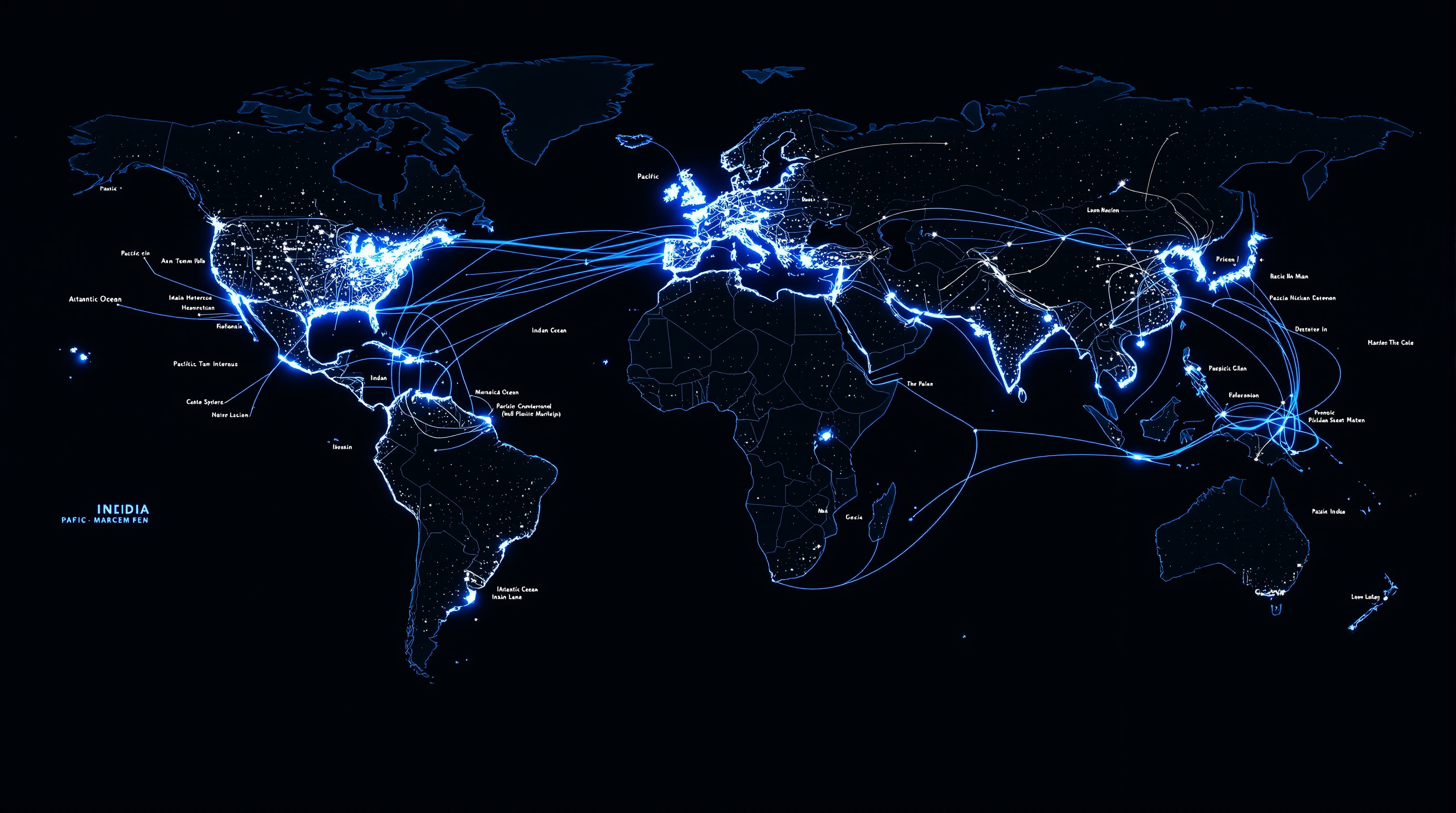
The global chemical tanker industry is organized around several major trade lanes, each serving distinct cargo flows between producing regions and consuming markets. Understanding these routes is fundamental to understanding how liquid bulk commodities move through global commerce.
Pacific Ocean Routes
The Pacific Ocean route is one of the most important and highest-frequency lanes in chemical tanker shipping. Vessels cross the Pacific back and forth transporting oils, fats, and liquid chemicals between ports of Pacific North America — including Vancouver, British Columbia and ports along the U.S. West Coast — and Asia-Pacific ports including Japan, South Korea, Taiwan, and China.
The Pacific trade is characterized by a mix of edible commodities (vegetable oils and animal fats) and industrial liquid chemicals. Some operators describe the service as analogous to pipelines stretching across the Pacific, with vessels running on regular schedules that effectively create a continuous liquid commodity bridge between continents.
According to the Baltic and International Maritime Council (BIMCO), Pacific chemical tanker trades represent one of the most competitive shipping markets globally due to the volume of cargo and the number of operators serving the route.
Arabian Gulf — Asia Routes
The Arabian Gulf-Asia trade lane is dominated by industrial liquid chemical flows originating in the Gulf region, particularly from petrochemical complexes in Saudi Arabia, Kuwait, and the UAE. These cargoes — liquid chemicals used as feedstocks in Asian manufacturing — flow primarily to South and Southeast Asian destinations, with South Korea and Japan as major receiving ports.
Long-term contracts are common on this route, reflecting the stable, predictable nature of petrochemical feedstock demand. Vessels on this service typically carry multiple cargo parcels simultaneously, with stainless steel tanks required for chemical cargoes that would corrode conventional steel or react with coated tank surfaces.
European Services via Suez Canal
Chemical tankers on the European trade route link the production regions of the Arabian Gulf and Pacific Asia with consuming markets in Europe, making round trips via the Suez Canal. Monthly service frequencies are common, with operators running vegetable oil and liquid chemical cargoes into European refinery and manufacturing destinations.
The European trade developed significantly from the 1980s onward as palm oil from Malaysia and Indonesia became a dominant global edible oil commodity, and as European chemical manufacturing grew its dependency on Asian and Gulf-origin chemical feedstocks.
Asian Short-Sea Trade
Beyond the deep-sea international trades, a substantial chemical tanker market operates in the Asian short-sea sector, moving liquid chemicals between ports within East, Southeast, and South Asia. These services use smaller vessels — often 5,000 to 15,000 DWT — that can access regional ports and provide the flexibility required for intra-regional chemical distribution.
Short-sea chemical tankers serve as feeder services to the deep-sea trade, collecting or distributing cargo from inland-accessible ports that cannot accommodate the larger deep-sea vessels.
World-Wide Tramping
In addition to scheduled liner-style services, a segment of the chemical tanker fleet operates as world-wide tramp vessels, following cargo wherever it is needed. Tramp chemical tankers provide flexibility for spot market cargoes and one-off shipments that do not fit neatly into scheduled service patterns.
Route Summary
Pacific Route
N. America ↔ Asia-Pacific; oils, fats, chemicals
Arabian Gulf-Asia
Gulf petrochemicals → South & East Asia
European via Suez
Asia/Gulf → European refineries monthly
Asian Short-Sea
Regional intra-Asian liquid chemical flows