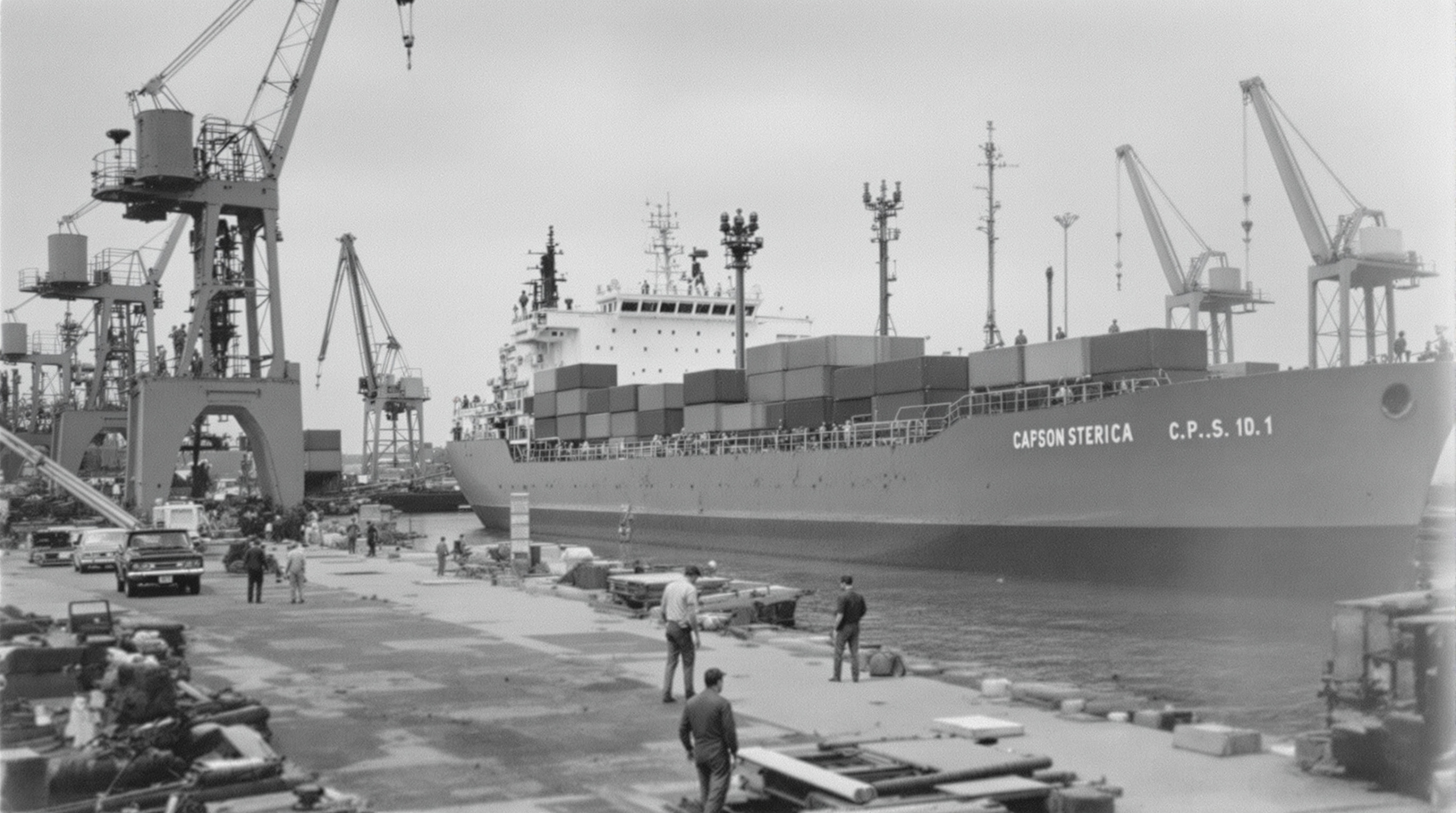
The chemical tanker sector as we know it today emerged in the early 1970s, shaped by the rapid growth of global chemical manufacturing, the expansion of vegetable oil trade in Asia, and the development of specialized vessel designs capable of safely carrying the diverse and sometimes hazardous liquid cargoes that global industry demanded.
The 1970s: Founding of a Sector
The early 1970s saw the establishment of several of the companies and vessel types that would define the chemical tanker industry. The growth of Pacific rim trade in fats and vegetable oils created demand for specialized tankers that could maintain cargo quality while also carrying industrial liquid chemicals on other legs of the voyage.
Long-term contracts became the commercial foundation of the developing industry. Contracts linking producers of palm oil in Malaysia with consumers in India and other Asian markets, or linking chemical manufacturers in North America with Asian buyers, provided the volume certainty needed to justify investment in specialized vessels.
By the late 1970s, vessels of approximately 17,500 DWT had emerged as a practical standard size for Pacific and Indian Ocean chemical tanker trades.
The 1980s: Fleet Growth and Route Expansion
The 1980s were characterized by rapid fleet growth and geographic expansion of chemical tanker services. European trade routes via the Suez Canal developed as the global palm oil trade expanded. The Arabian Gulf emerged as a major source of industrial liquid chemicals as petrochemical complexes in Saudi Arabia and the Gulf states ramped up production.
Fleet capacity grew dramatically through the decade, with leading operators expanding from handfuls of vessels to fleets of 20 or more ships. The introduction of stainless steel center tank configurations in the mid-1980s expanded the range of chemical cargoes that operators could safely transport.
The 1990s: Regulation and Consolidation
The 1990s brought two defining trends: increased regulatory requirements and industry consolidation. The implementation of the ISM Code from 1993–1998 imposed systematic safety management requirements on all commercial shipping. The U.S. Oil Pollution Act of 1990 drove the industry toward double-hull vessel construction. ISO quality certifications became standard competitive requirements.
Industry consolidation saw smaller operators being absorbed by larger companies with the resources to meet escalating regulatory and operational requirements. The late 1990s saw total yearly cargo transportation figures reach millions of tonnes as Asia's manufacturing growth drove chemical feedstock demand.
The 2000s: Scale and Specialization
The 2000s brought increased scale and deeper specialization. Major operators expanded fleets to 40 or 50 vessels, representing hundreds of thousands of DWT of capacity. New vessel series with 25,000 DWT and above entered service, and double-skin full stainless steel tank configurations became the technical benchmark for premium chemical tanker service.
Globalization accelerated chemical trade flows, with Shanghai, Seoul, Singapore, and other Asian hubs becoming critical nodes in chemical tanker networks. Ship management companies, established in previous decades to handle technical operations, grew into specialized businesses in their own right.
According to UNCTAD's Review of Maritime Transport, the global chemical tanker fleet has been one of the fastest-growing segments of the world merchant fleet over the period from 1980 to the present day.
Industry Development Today
Today's chemical tanker industry continues to evolve under the influence of environmental regulation, decarbonization pressures, and shifting trade patterns. Regulations limiting sulfur emissions, greenhouse gas requirements, and ballast water management standards all drive ongoing investment in vessel modification and new construction. Meanwhile, the expansion of chemical manufacturing in China, India, and Southeast Asia continues to generate new cargo flows that reshape the industry's trade routes.